The fuel crisis affecting air travel is driven by escalating geopolitical tensions, and further escalation cannot be ruled out. European airports, in particular, are in trouble. Countries could start collapsing one after another. It is not just airlines that are at risk—tourism is as well. COVID-19 has affected these sectors in different ways, but the consequences could be similar, reported VG.hu.
“We are going to hit them extremely hard over the next two to three weeks,” warned U.S. President Donald Trump, further increasing the risk of the conflict dragging on.
The backdrop to the global supply shock is that about one-fifth of the world’s crude oil passes through the Strait of Hormuz, and its closure had an immediate impact on the markets.
Based on Argus data, the price of jet fuel in Europe hit a record high on Thursday, rising to $1,900 per ton.
Although sufficient supplies are currently available, the trade journal is already warning of shortages. Based on their forecast, Portugal could run out of kerosene within four months, Hungary within five, Denmark within six, Italy and Germany within seven, and France and Ireland within eight months. Poland, however, is nearly self-sufficient and thus less vulnerable.
The current situation in the Middle East and the uncertainty about how long it will last are indeed causing concern regarding the availability of jet fuel in Europe,”
said Ourania Georgoutsakou, Executive Director of Airlines for Europe.
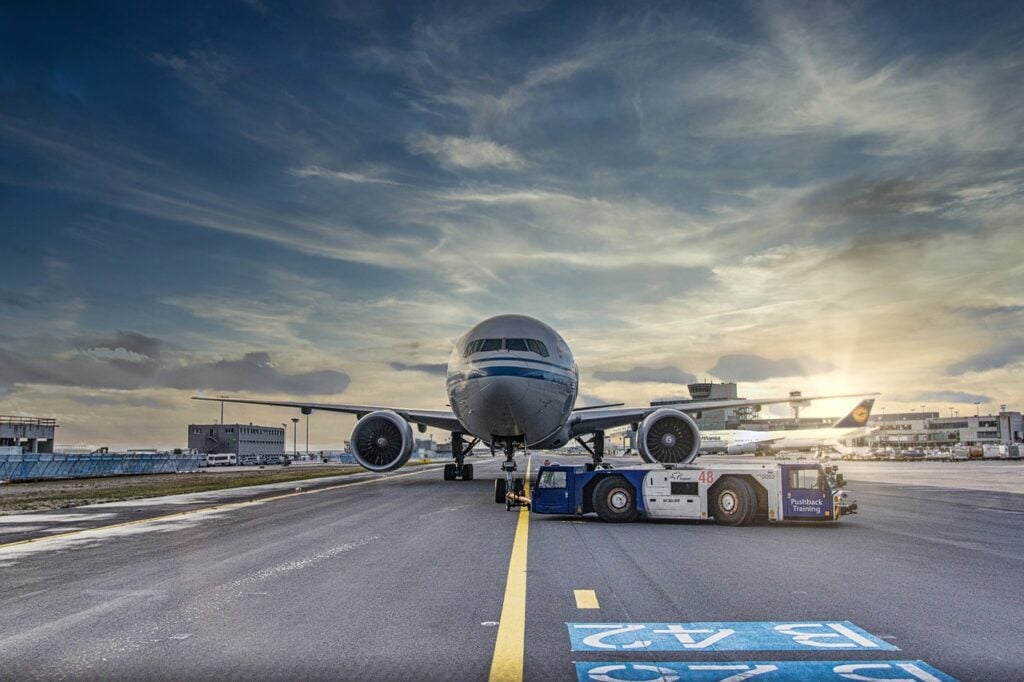
Photo: Pixabay
Airlines are already preparing for the worst-case scenario. Michael O’Leary, CEO of Ryanair, told Ireland’s ITV that his company is considering canceling 5–10 percent of its flights between May and July if the war continues. He warned that airlines will have no leeway in deciding which routes to cancel, as fuel supply will dictate their decisions.
The sector was already struggling with structural problems even before the conflict. Due to sanctions on Russian oil and declining European refining capacity, the continent is increasingly reliant on imports.
According to the International Air Transport Association (IATA), Europe has long been a net importer, with imports covering about 30 percent of demand.
The organization has previously warned that import dependence and uneven infrastructure increase the risk of local shortages and price volatility, especially during times of geopolitical shocks. The situation is further exacerbated by the fact that airlines are forced to avoid the conflict zone, which means longer flight routes and higher fuel consumption.
According to Eurocontrol, up to 1,150 flights a day could be affected by rerouting during the summer season.
“The longer the hostilities continue, the greater the impact rising fuel prices and potential shortages will have on flight numbers and fares,” the organization warned.
Under normal circumstances, one-fifth of the world’s oil and liquefied natural gas (LNG), as well as significant quantities of petroleum products—including half a million barrels of kerosene daily—flow through the Strait of Hormuz, which has been de facto closed for weeks, mostly to Europe, but also to Africa and Asia.
Based on a report by the Turkish Anadolu news agency, 34,000 barrels of kerosene are exported daily from the region via the Red Sea, a route now threatened by the outbreak of war in the region.
Europe is particularly dependent on the region; according to the International Air Transport Association (IATA),
about 30 percent of its kerosene needs come from the Persian Gulf region,
while for the United Kingdom, the figure is already half.
“May will be very difficult because we cannot make up for the kerosene lost due to the closure of the Strait of Hormuz,” said George Shaw.

Via Világgazdaság; Featured photo: Pixabay
The post Duet to Fuel Shortages, Air Traffic Could Collapse by May appeared first on Hungary Today.





