Barely two days after the Hungarian elections led to the downfall of Viktor Orbán’s government, developments are already taking shape that could signal a new direction in European security and energy policy. With Ukraine announcing the restart of oil flows via the Druzhba pipeline, Berlin is moving to unlock billions in aid, while Brussels pushes forward calls to overhaul the EU treaties.
Ukrainian experts will complete repairs to the Druzhba oil pipeline by the end of April, Ukrainian President Volodymyr Zelenskyy announced on Tuesday during a joint press conference with German Chancellor Friedrich Merz in Berlin. As reported by Hungary Today, the strategically important Druzhba oil pipeline has not pumped oil to Central Europe since January.
Until now, Kyiv had blamed Russian attacks for the shutdown, while Hungary and Slovakia spoke of a deliberate oil blockade. The outgoing Hungarian Prime Minister Viktor Orbán had consequently pursued a clear doctrine: “No oil, no money.” As a result, he consistently blocked EU financial aid for Ukraine.
An EU investigative commission sent to assess the condition of the Druzhba pipeline in Ukraine reportedly went silent for several days shortly before the Hungarian election, according to diplomatic sources.
Communication with Brussels resumed only after the results were in—an episode that has become a subject of speculation in diplomatic circles.
“As we promised, experts will repair it by the end of April. Not completely, but enough to make it operational. The repairs to all the tanks will not be finished yet, because that is a long process,” Volodymyr Zelenskyy stated at Tuesday’s press conference. He added,
Kyiv “is very confident” that, in line with this, the member states of the European Union—primarily Hungary—will fulfill their commitments, and there will be no further obstacles to the adoption of decisions that are crucial for Ukraine.
Ukraine’s President has repeatedly promised to repair the oil pipeline as soon as possible. Most recently, at a press conference in Kyiv last Friday, he said that Ukraine would complete repairs on the Druzhba oil pipeline by spring, provided that the promised European funding in exchange for the ability to transport oil remains in place.
Chancellor Friedrich Merz reacted quickly to the messages from Kyiv and Budapest, Bloomberg reports. He called for the immediate disbursement of a 90-billion-euro loan to Ukraine. Viktor Orbán’s election defeat had removed a “significant obstacle” to financing the nearly insolvent country, he noted.
In addition to financial support, Chancellor Merz and President Zelenskyy reaffirmed closer military cooperation, particularly in air defense and drone production. The German chancellor also spoke out against “second-class” EU membership for Ukraine, but cautioned that the accession process would take time.
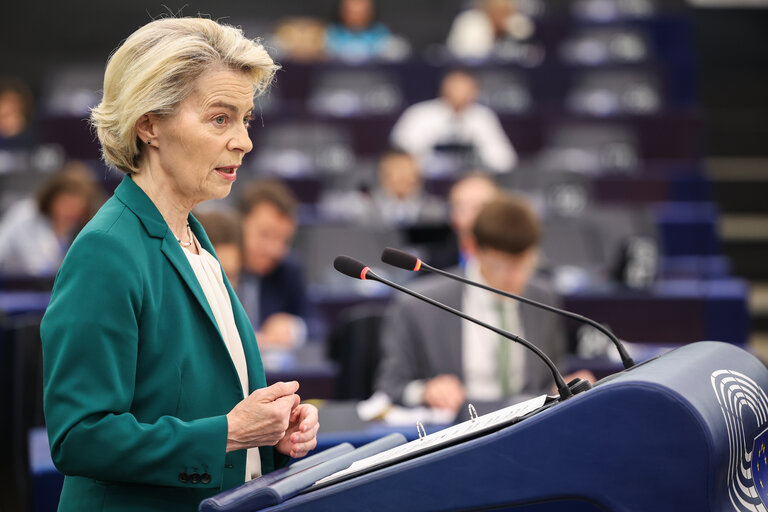
Meanwhile, Brussels is preparing for a new era of cooperation with Budapest. European Commission President Ursula von der Leyen announced that she would begin working with the new Hungarian government “as soon as possible” to achieve long-delayed progress.
But the plan goes beyond mere reconciliation.
The Commission President wants to use the current political momentum to fundamentally reform the EU’s decision-making structures.
Her goal is to abolish the unanimity principle in foreign policy. Such a move would significantly curtail the power of individual member states and is considered one of the biggest steps toward centralizing the European Union in decades.
For Ukraine, the turnaround comes at the last minute. Recent reports from the Ukrainian central bank showed a rapid depletion of currency reserves, as vital EU funds failed to materialize due to the Hungarian veto.

Via MTI, Bloomberg; Featured image: newsroom.consilium.europa.eu
The post Election Outcome Clears Path for Russian Oil Flows via Ukraine appeared first on Hungary Today.





