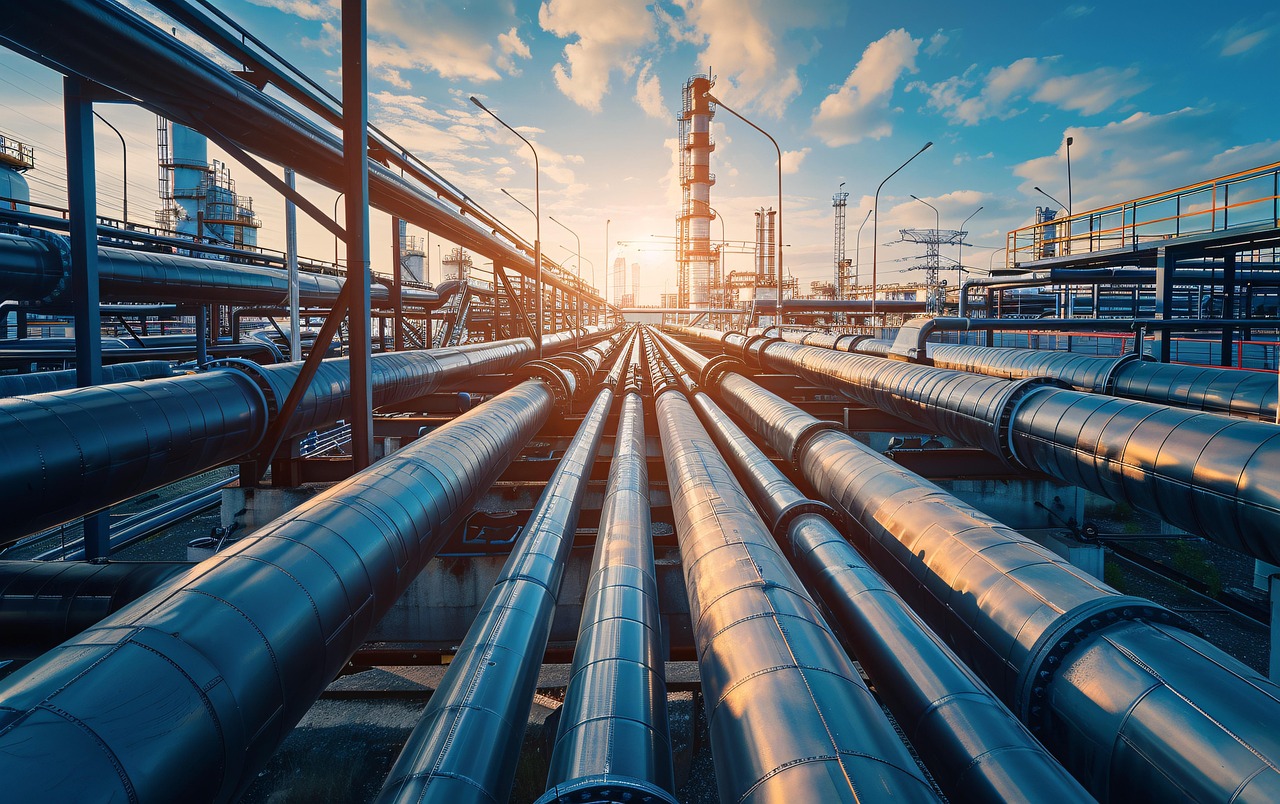
MOL-INA refinery in Rijeka, Croatia
The newly renovated Rijeka refinery can now produce up to 30 percent more diesel than before. The investment was made by INA, the Croatian subsidiary of the MOL Group, at a cost of nearly €700 million. There are further development plans for the Rijeka refinery, which will be operating at full capacity from 2027.
In a critical and highly vulnerable European oil and fuel market situation, the Croatian oil company INA handed over its Rijeka Refinery, which was renovated at a cost of nearly €700 million. This was INA’s largest single project to date, although it was also a huge undertaking for its parent company, MOL, and was of great significance for Croatia’s industrial projects.
The most significant (and most expensive, at €320 million) element of the development was the construction of the delayed coking unit (DCU), as it enabled the production of much more valuable end products from a given quantity of crude oil than before, with the coke remaining at the end of the process being produced separately from the process. With the commissioning of the DCU, INA will increase its production of diesel and other high-value middle distillates by up to 30 percent. The improvement in efficiency will reduce the company’s and, ultimately, Croatia’s product import needs, which is particularly important at the peak of the summer tourist season.
The refinery will be operating at full capacity from 2027.
Croatia has not really needed to import gasoline so far, and from now on it will only need to purchase minimal amounts of diesel, which is much more important than gasoline, from abroad, said Goran Plese, INA’s downstream managing director, at a briefing prior to the handover.
As a further result of the development, the refinery will be able to process several types of crude oil.
Rijeka currently receives oil from West Africa and the Middle East, and previously also from Russia, but the latter is no longer possible due to sanctions against Russia. This is noteworthy because the country’s fuel market is constantly expanding: between 2021 and 2025, gasoline sales will increase by 28 percent and diesel sales by 30 percent. INA controls 86-88 percent of the Croatian gasoline market and 65 percent of the diesel market.
In connection with the regional significance of the investment, Krisztián Pulay, MOL Group’s executive director responsible for downstream, production and development, outlined the benefits of cooperation between MOL’s refineries. In addition to Rijeka, the company has similar facilities in Százhalombatta (near Budapest) and Bratislava, and is in the process of acquiring a majority stake in the Pančevo refinery of Serbia’s NIS. Such advantages include the possibility of joint, coordinated and flexible procurement, cooperation in product storage and stockpiling, and the ability to take advantage of the fact that the refineries in question can operate in different configurations. According to one of the director’s answers, the Rijeka refinery will not need oil of Russian origin.
Szabolcs Szabó, executive director of downstream value chain management at the MOL Group, said that despite events in the Middle East and the blockade of pipeline oil shipments, the MOL Group’s oil supply is secure. Alternative shipments are currently arriving at the port of Omišalj in Croatia, and the procurement of Russian oil by sea is also underway. MOL is waiting for pipeline operator Janaf to comply with international regulations and its contractual obligations and transport Russian oil to Százhalombatta and Bratislava via the Adria pipeline.
Via Világgazdaság; Featured image: Facebook/Magyar Levente
The post MOL’s Modernized Croatian Refinery Boosts Diesel Output appeared first on Hungary Today.





