The Hungarian army has undergone significant renewal over the past ten years, with modern equipment now available, new capabilities developed, and the army’s international cooperation system strengthened, the defense minister emphasized on Monday in Kecskemét (central Hungary) at the ceremony marking the return of the Hungarian Defense Forces’ Baltic Air Defense Task Force.
At the celebrations marking the return of Block 69, the Baltic air defense force of the Hungarian Defense Forces, Kristóf Szalay-Bobrovniczky explained that airspace defense is one of the most complex areas of modern warfare. This is particularly true at a time when war is raging in Eastern Europe and security risks are constantly increasing.
He pointed out that the war between Russia and Ukraine in our neighborhood had clearly shown how fragile security is and how quickly what we had long taken for granted could become uncertain.
The security situation in Europe has deteriorated significantly in recent years,”
the minister emphasized.
In his opinion, security cannot be taken for granted, but it is a task that requires constant presence, readiness, and a sense of responsibility. He therefore emphasized that military operations that directly serve to maintain peace and stability are of particular importance. As he said, the airspace surveillance mission in the Baltic states is precisely such a task.

Photo: honvedelem.hu
In Kristóf Szalay-Bobrovniczky’s view, a unit of the Hungarian Air Force has not only performed its duties over the past four months, but has also assumed responsibility for the security of Hungary and its allies.
Between August 1 and December 1, Block 69 of the Hungarian Defense Forces for Baltic Air Policing Mission was responsible for protecting the airspace of Estonia, Latvia, and Lithuania with four Gripen fighter jets, with the technical equipment and 80 personnel necessary to perform this task, he explained.
Hungary is a reliable NATO ally, and this commitment cannot be measured primarily in statements, but in deeds: when the security of the alliance requires it, Hungary is there, takes on tasks and carries them out. Participation in the airspace surveillance mission in the Baltic states was already the fourth, he added.
This year’s mission included 22 real alerts, 87 training alerts, and more than 400 flight hours,
which proves that the soldiers of the Hungarian Defense Forces are prepared for such tasks not only technically, but also organizationally and mentally, says the minister.
The soldiers understand and apply the tools of modern warfare, are able to cooperate with allies, and perform their duties in a disciplined and reliable manner, as demonstrated by the mission in the Baltic states, emphasized Kristóf Szalay-Bobrovniczky, thanking all soldiers for their service over the past four months.
Colonel General Gábor Böröndi, Chief of the General Staff of the Hungarian Defense Forces, said that the preparation, discipline, and expertise of the Hungarian soldiers participating in the mission would give Hungary a worthy place in the community of allied nations. He pointed out that airspace surveillance was not only a task for the Baltic states, but also a guarantee of everyday security.

Photo: MTI/Bús Csaba
Since Estonia, Latvia, and Lithuania do not have fighter jets, the offer by NATO member states to participate on a rotational basis is not only a military obligation but also a tangible expression of collective defense. The Hungarian army is in a position to take on an international role that will strengthen our country’s security, credibility, and weight in the alliance system in the long term, commented the colonel general.
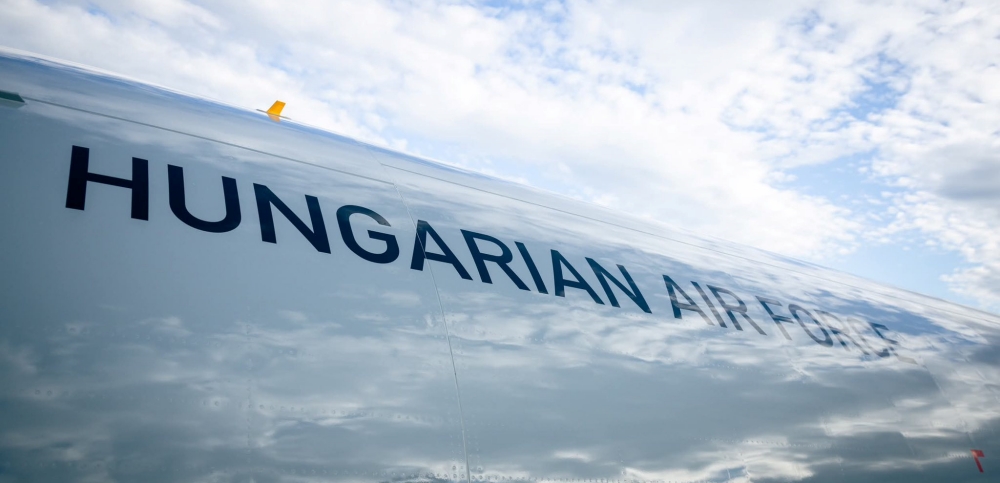
Via MTI; Featured image: Facebook/Szalay-Bobrovniczky Kristóf
The post Our Topguns Return Home After a Successful Baltic Mission appeared first on Hungary Today.





