The European Union is preparing for two new economic policy decisions that Hungary considers dangerous. The Hungarian government is determined to protect domestic farmers and jobs, Foreign and Trade Minister Péter Szijjártó said on Monday in Brussels.
After the meeting of the EU Trade Council, the minister held a press conference during which he sharply criticized the European Commission’s economic policy to date. Péter Szijjártó emphasized that the Commission had made “serious mistakes” in recent years, including the introduction of tariffs, restrictions on energy procurement, sanctions, and “bad agreements.” These mistakes had caused serious difficulties for the European economy, he added.
The minister warned that
Brussels was now preparing two further “harmful decisions,” one of which threatened Hungarian farmers and the other Hungarian jobs.
He sees the first danger in the planned signing and rapid implementation of a free trade agreement between the EU and Latin American countries (Mercosur Agreement) before the end of this year. In its current form, this agreement poses a significant threat to Hungarian agriculture, the minister explained.
The @EU_Commission wants to sign and implement the EU-Mercosur free trade agreement this year. This deal would expose Hungarian agriculture to unfair competition by flooding our market with Latin-American imports and restricting our export opportunities in the EU.
The…
— Péter Szijjártó (@FM_Szijjarto) November 24, 2025
“It is not just about the Hungarian food market being flooded with Latin American agricultural products,” said Péter Szijjártó. Rather, he explained, the export opportunities for Hungarian farmers within the EU would be curtailed, as the agreement would lead to a sharp increase in the influx of agricultural goods from Latin America.
Hungary had called on Brussels to take protective measures for European farmers before concluding the agreement. However, the Commission’s proposal did not protect farmers in small member states in any way. The Commission only wanted to take protective measures if at least 50 percent or, in an emergency, 25 percent of total European agricultural production was at risk.
However, as small member states account for less than 5 percent of EU agriculture, this regulation would only help the large member states,”
the minister emphasized.
Péter Szijjártó cited Brussels’ plans to centralize decisions on investment support for member states as a second threat. This would effectively eliminate competition for investment within the EU, he warned.
“In practice, a central committee here in Brussels, similar to the former COMECON, would dictate which investments are allowed to come to Europe and which country they should go to, instead of member states continuing to compete for these investments,” the minister said, drawing a historical comparison.
Hungary has proven very successful in competing for investment and has created the most attractive investment environment in the EU, Péter Szijjártó recalled. “We are continuously breaking investment records,” he emphasized.
Brussels now wants to artificially end these competitive successes, often against Western European countries.”
“They want to artificially eliminate the competitive advantage of Central and Eastern Europe, and Hungary in particular, in attracting investment here in Brussels because they are tired of us repeatedly beating Western European countries in the competition for large investments,” the minister said.
In conclusion, FM Péter Szijjártó reiterated that the Hungarian government would not allow inferior Ukrainian grain or agricultural products from South America onto the Hungarian food market in order to protect farmers. Nor would it allow Brussels to decide which country an investment should go to or not, he added.
The minister warned that, based on previous experience with many bad and harmful decisions in the past, negative decisions from Brussels must also be expected in the future.
At today’s Foreign Affairs Council, I was listening to colleagues’ lectures about how “dangerous” and “unacceptable” it supposedly is to cooperate closely with China.
Meanwhile, I was pleased to learn that @realDonaldTrump had a successful phone call with President Xi Jinping…
— Péter Szijjártó (@FM_Szijjarto) November 24, 2025
In a post on his social media page, Péter Szijjártó also criticized the “over-ideologized Brussels foreign policy” that is isolating Europe. While he had to listen to the dangers of close cooperation with China for over an hour and a half at the Council of Foreign Ministers, he was pleased to note that U.S. President Donald Trump had had a successful telephone conversation with Chinese President Xi Jinping, he wrote. According to Péter Szijjártó, world powers conclude agreements based on common sense, while Europe follows ideological courses.
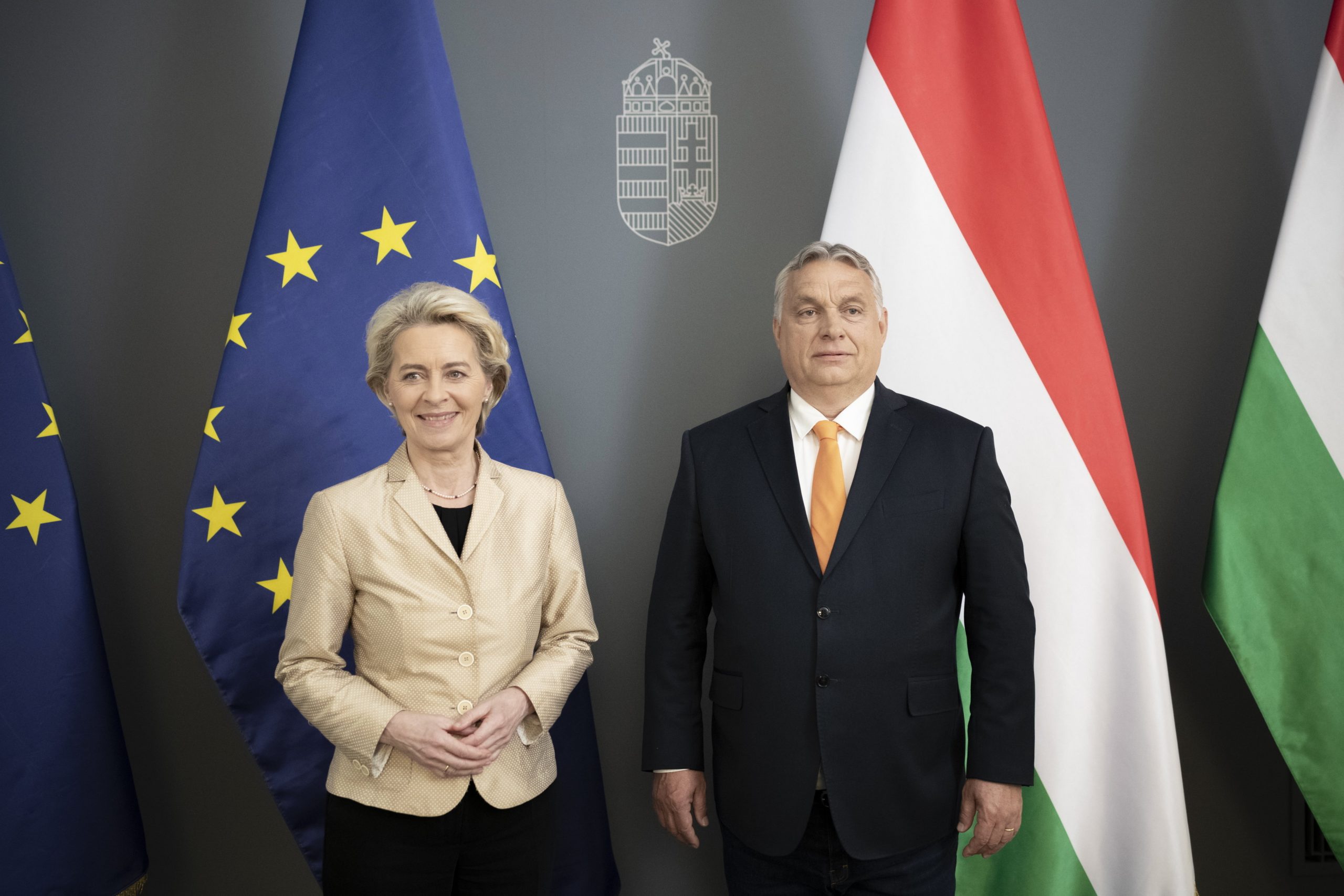
Via MTI; Featured photo: Hungary Today
The post Government Rejects Mercosur Deal and Investment Centralization appeared first on Hungary Today.





